The Whole Self Standard: How to Find—or Build—a Community That Doesn't Require You to Edit Yourself at the Door
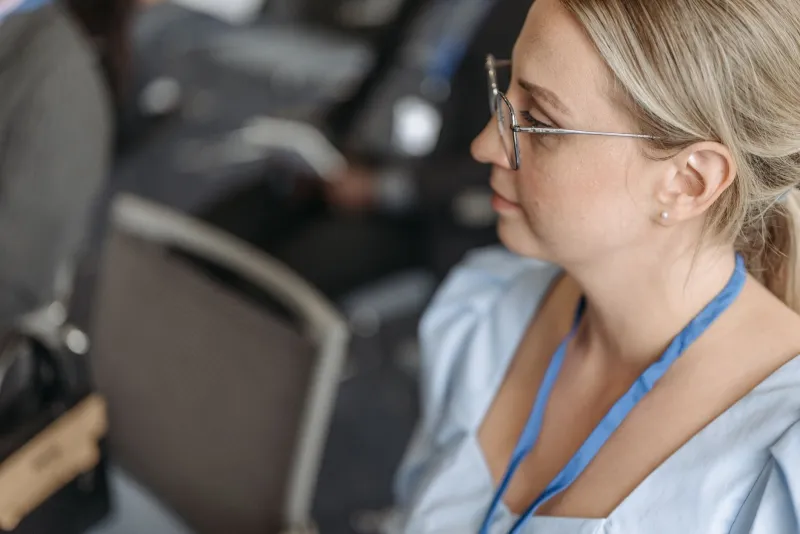
Most accomplished professionals have learned, through years of experience, to maintain two distinct social registers. There is the version of themselves that shows up to board meetings, industry panels, and networking events—measured, strategic, credentialed. And there is the version that exists in private: curious, uncertain, occasionally overwhelmed, animated by questions that have no obvious professional utility. The tragedy is not that these two versions exist. It is that so few communities allow them to occupy the same room at the same time.
The concept of "code-switching" is often discussed in the context of racial and cultural identity, and rightly so. But a quieter form of it operates among high-achieving individuals across every demographic: the constant recalibration of which parts of oneself are safe to reveal, and to whom. The intellectual ambition gets displayed at the conference. The emotional complexity stays home. The professional credentials get announced at the mixer. The existential questions get reserved for the therapist's office—if they get aired at all.
At Koume Club, we believe this bifurcation is neither inevitable nor desirable. The communities that produce the most enduring growth—personal, professional, and intellectual—are those built on what we call the Whole Self Standard.
Why Most Professional Communities Fail Ambitious People
The failure mode of most professional networks is predictable. They are optimized for a narrow bandwidth of interaction: the exchange of credentials, opportunities, and tactical advice. These functions are not without value. But they create an implicit social contract in which depth of character, personal struggle, and intellectual vulnerability are treated as off-topic—distractions from the transactional business at hand.
For individuals of significant accomplishment, this creates a particular kind of suffocation. They are not looking for a support group. They are not seeking permission to be fragile. What they want—what they rarely find—is a space in which their full range of interests, questions, and experiences is treated as relevant rather than disqualifying.
The ambitious person who is also grappling with questions of meaning, or navigating a significant personal transition, or simply curious about fields far outside her professional lane, does not need to be handled carefully. She needs to be in a room where those qualities are recognized as assets rather than inconveniences.
The Infrastructure of Genuine Inclusion
Communities that successfully hold ambitious people in their entirety do not arrive at that capacity by accident. They are built with specific structural decisions that either enable or foreclose authentic engagement.
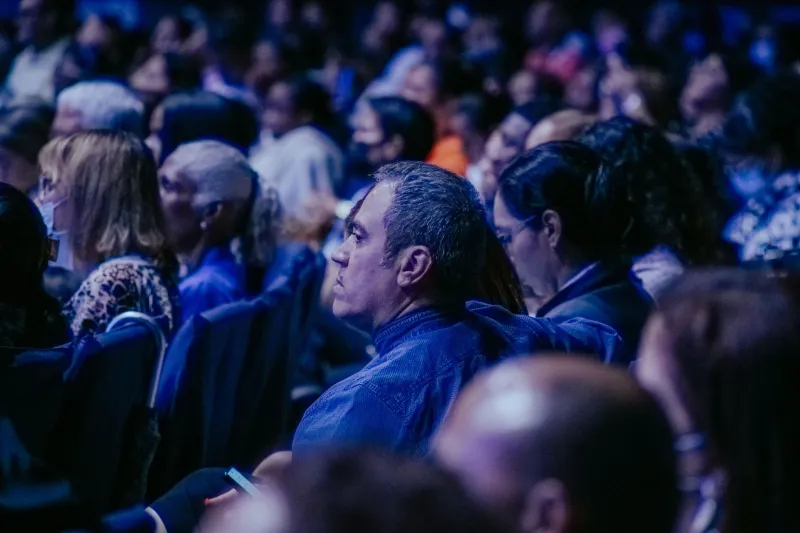
Curation over volume. The single most consequential choice a community can make is to prioritize the quality of its membership over its scale. Large, open networks default toward the lowest common denominator of interaction—pleasantries, status signaling, and surface-level exchange. Smaller, deliberately assembled communities can establish and sustain a higher baseline of engagement. When every person in the room has been chosen for their combination of accomplishment, curiosity, and character, the social permission to go deeper is implicitly granted from the moment of entry.
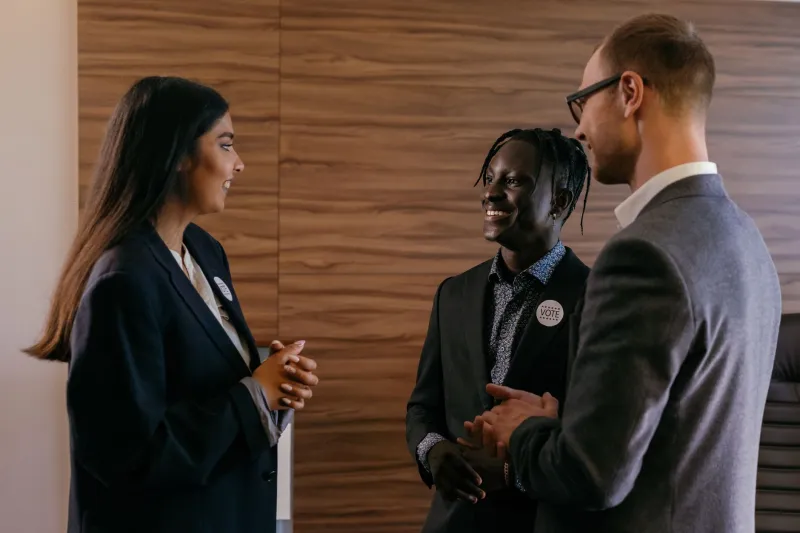
Conversation architecture. The structure of how people talk to one another within a community matters as much as who is in the room. Communities that default to panel formats, pitch-style introductions, or open networking cocktail hours are architecturally biased toward performance. Communities that build in structured dialogue, small-group discussion, and facilitated vulnerability create the conditions for something more substantive. The format is not incidental—it is the message.
Explicit norms around intellectual honesty. The communities worth belonging to are those where saying "I don't know" is not a social liability, where changing one's position in response to new evidence is treated as intellectual integrity rather than weakness, and where the admission of uncertainty is understood as a prerequisite for genuine learning. These norms do not self-generate. They must be modeled by leadership and reinforced by community culture.
Recognizing a Community Worth Joining
For those searching rather than building, the diagnostic questions are worth considering carefully before committing time, energy, or membership fees to any community.
Does the community's public-facing identity emphasize titles and credentials, or does it emphasize the quality of exchange it makes possible? The former signals a community organized around status maintenance. The latter signals one organized around growth.
How does the community handle disagreement? A community where dissent is quietly discouraged, or where certain perspectives are structurally privileged over others, will eventually require its members to self-censor in ways that undermine authentic belonging.
Are the most accomplished members of the community also among its most engaged? When high-achieving individuals remain deeply invested in a community over time—not merely lending their names to it, but genuinely participating—it is a reliable indicator that the community is delivering something they cannot easily find elsewhere.
Building From Scratch: The Case for Starting Small
For those who have surveyed the existing landscape and found it wanting, the option to build is more accessible than it may appear. The most resilient communities rarely begin with infrastructure, funding, or formal organization. They begin with a clear and honest answer to a single question: what kind of conversation am I not able to have anywhere else, and who else is hungry for it?
A standing dinner for eight people with a shared commitment to intellectual honesty is a community. A monthly gathering of professionals who have agreed to bring their actual questions rather than their polished answers is a community. The scale is irrelevant. The standard is everything.
Koume Club itself was conceived in this spirit—as a response to the observation that the most interesting people in any given professional ecosystem are often the most underserved by the communities available to them. The solution was not to build a larger network, but to build a more intentional one.
The Standard Worth Holding
Belonging, at its most meaningful, is not the experience of being tolerated or accommodated. It is the experience of being recognized—of arriving in a room and sensing, without performance or negotiation, that the full complexity of who you are is not only acceptable but genuinely welcome.
For high-achieving individuals, that experience is rarer than it should be. But it is not impossible to find, and it is entirely possible to build. The prerequisite is a refusal to settle for communities that ask you to leave the most interesting parts of yourself at the door—and the clarity to recognize, or create, the ones that don't.